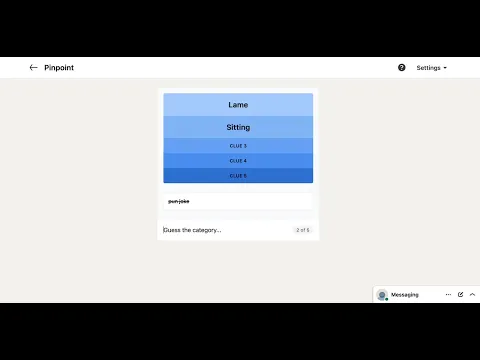
LinkedIn Pinpoint #540 Answer & Analysis
Looking for the Pinpoint #540 answer? Beyond Lame, Sitting, Rubber, Peking, and Donald, the logic is trickier than you think. It's not about a mix of proper nouns and common adjectives! Get our fast answer and expert logic tips below to save your streak now.
LinkedIn Pinpoint 540 Clues & Answer
💡 Hover (desktop) or tap (mobile) each clue to see how it connects to the answer
#1
Refers to an official in the final period of office (a "Lame Duck").
#2
Describes an easy target or someone in a vulnerable position ("Sitting Duck").
#3
The ubiquitous "Rubber Duck," a staple of bath-time iconography.
#4
A famous traditional dish from Beijing ("Peking Duck").
#5
The Disney character "Donald Duck"; the qualifier ensures we focus on the character.
Answer: Words that come before 'duck'
LinkedIn Pinpoint #540 Expert Logic
1. Introduction
LinkedIn Pinpoint #540 is a delightful exercise in linguistic versatility. This puzzle challenges players to find a common denominator across vastly different domains—ranging from international diplomacy and culinary arts to childhood nostalgia and pop culture. The common thread isn't a physical characteristic, but a specific linguistic anchor that transforms each clue into a well-known compound phrase.
2. How the Puzzle Came Together
The logic of this puzzle is built on the "Suffix Connection" strategy. It begins with Lame and Sitting, two adjectives that, in a vacuum, describe physical states or vulnerabilities. However, when paired with the target word, they form powerful political and tactical idioms.
The puzzle then pivots to the domestic and the delicious. Rubber immediately evokes a sense of playfulness, while Peking transports the player to the world of fine Chinese cuisine. These two clues act as the "mid-game" bridges that narrow the possibilities significantly. Finally, the inclusion of Donald (if not on stands) serves as the definitive pop-culture anchor. By specifying the character "Donald" (and perhaps cheekily excluding statues or "standees"), the puzzle effectively forces the player to complete the phrase with the most famous waterfowl in animation history.
3. Category: Pinpoint 540
- A. Core Answer: Words that come before 'duck'
- B. Difficulty Rating: 1.5 / 5.0 (The clues "Peking" and "Rubber" are high-signal indicators that usually lead to an immediate "Aha!" moment).
4. Words & How They Fit
Semantic Logic Breakdown
- Idiomatic Expressions: Words that create metaphors for vulnerability or transition.
- Noun Modifiers: Words that specify a particular type of object or dish.
- Proper Nouns: A name that is inseparable from the target word in global branding.
Logic Role Classification
| Clue | Logical Role | Why it fits |
|---|---|---|
| Lame | The Political Idiom | Refers to an official in the final period of office (a "Lame Duck"). |
| Sitting | The Tactical Idiom | Describes an easy target or someone in a vulnerable position ("Sitting Duck"). |
| Rubber | The Domestic Object | The ubiquitous "Rubber Duck," a staple of bath-time iconography. |
| Peking | The Culinary Specialty | A famous traditional dish from Beijing ("Peking Duck"). |
| Donald | The Pop-Culture Anchor | The Disney character "Donald Duck"; the qualifier ensures we focus on the character. |
5. Better Analysis Directions
A. Red Herring Analysis (The "Vulnerability" Trap)
An intermediate player might see Lame and Sitting and assume the category is "Terms for Weakness" or "Injuries." However, Peking and Rubber quickly dismantle this theory. The "Expert" recognizes that Pinpoint puzzles often start with abstract concepts and move toward concrete nouns to help the player triangulate the answer.
B. Historical Pattern (The "Blank Filler" Meta)
Pinpoint #540 follows the classic "Compound Word/Phrase" pattern. Historically, when the game provides a proper noun (like Donald) or a geographic location (like Peking), it is almost always part of a fixed phrase. Experts know to prioritize these "Fixed Phrases" over the more descriptive adjectives (like Lame) during the initial scan.
C. The Expert Workflow
- Identify the Anchor: "Peking" almost exclusively pairs with "Duck" in a word-association context.
- Test the Hypothesis: Does "Duck" work with "Rubber"? Yes. Does it work with "Sitting"? Yes.
- Confirm the Outlier: Does "Donald Duck" make sense? Absolutely.
- Refine the Answer: Formulate the relationship—these are all words that precede "Duck."
6. Lessons Learned From Pinpoint 540
The key takeaway from this puzzle is the importance of Contextual Shifting. To solve #540, a player must be able to jump from politics to the kitchen to a cartoon. When you find yourself stuck, try to change the "genre" of the words you are looking at. If a word seems like an adjective, try treating it as a brand name or a geographic indicator.
💡 Trivia: The Stock Market Origin of the "Lame Duck"
While we today associate the term "Lame Duck" with politicians finishing their terms, the phrase actually originated in the London Stock Exchange in the 18th century.
It was used to describe a stockbroker who defaulted on his debts. In those days, a broker who couldn't pay his bills would "waddle" out of the Exchange in disgrace, much like an injured bird. It wasn't until the 19th century that the term migrated across the Atlantic and became a staple of American political jargon!
FAQ
Q: Why was the qualifier "(if not on stands)" added to Donald? A: This is likely a clever bit of wordplay or a specific distinction. If "Donald" is on a "stand" (like a newsstand or a collector's stand), he might be a comic book or a figurine. Without the stand, he is simply the character—the Duck.
Q: Is "Peking Duck" the same as "Beijing Duck"? A: Yes. "Peking" is the older postal romanization of the city now known as Beijing. While the city's name changed in English usage, the dish remains internationally famous under its traditional name.
Watch the logic walkthrough