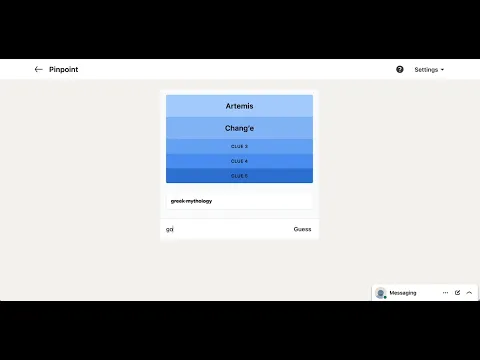
LinkedIn Pinpoint #605 Answer & Analysis
Looking for the Pinpoint #605 answer? Beyond Artemis, Chang'e, Chandrayaan, Luna, and Apollo (a 'first' in 1969), the logic is trickier than you think. It's not about mythological deities and figures! Get our fast answer and expert logic tips below to save your streak now.
LinkedIn Pinpoint 605 Clues & Answer
💡 Hover (desktop) or tap (mobile) each clue to see how it connects to the answer
#1
NASA's current program to land the first woman and first person of color on the Moon.
#2
The China Lunar Exploration Program (CLEP), famous for the first soft landing on the far side of the Moon.
#3
ISRO's lunar program; Chandrayaan-3 successfully landed near the lunar South Pole in 2023.
#4
The Soviet Union's series of robotic lunar missions, achieving many "firsts" in lunar exploration.
#5
NASA's legendary program that successfully landed humans on the Moon between 1969 and 1972.
Answer: Space programs focused on the Moon
LinkedIn Pinpoint #605 Expert Logic
1. Introduction
LinkedIn Pinpoint #605 is a logical journey through humanity's "Lunar Dreams." This set of clues spans from the golden age of the Space Race to the modern international surge of lunar exploration. The key to solving this puzzle is identifying that these project names, drawn from different cultures and eras, all share a single physical destination: the Moon.
2. How the Puzzle Came Together
The logic of this puzzle utilizes a "Panoramic Global Space Map" strategy. The entry point is undoubtedly Apollo, the globally recognized anchor for lunar landing. This is followed by Artemis, representing NASA's modern lunar ambitions and establishing a theme of legacy and progression.
To broaden the scope, the puzzle introduces Chang’e, the hallmark of China's space achievements, and Chandrayaan, India's rising star in lunar exploration. Finally, the Soviet-era Luna completes the 60-year historical arc. By grouping lunar programs from the US, USSR, China, and India, the puzzle identifies a singular shared attribute: Space programs focused on the Moon.
3. Category: Pinpoint 605
- A. Core Answer: Space programs focused on the Moon
- B. Difficulty Rating: 1.5 / 5.0 (Easy. The high visibility of Apollo and Chang’e allows most players to lock into the "Moon" theme instantly.)
4. Words & How They Fit
| Clue | Logical Role | Why it fits |
|---|---|---|
| Artemis | Modern Frontier Term | NASA's current program to land the first woman and first person of color on the Moon. |
| Chang’e | Asian Space Anchor | The China Lunar Exploration Program (CLEP), famous for the first soft landing on the far side of the Moon. |
| Chandrayaan | Rising International Star | ISRO's lunar program; Chandrayaan-3 successfully landed near the lunar South Pole in 2023. |
| Luna | Historical Legacy | The Soviet Union's series of robotic lunar missions, achieving many "firsts" in lunar exploration. |
| Apollo | Category Definer | NASA's legendary program that successfully landed humans on the Moon between 1969 and 1972. |
5. Better Analysis Directions
A. Red Herring Analysis (The Mythology Trap)
A common mistake is guessing "Mythological Figures." While Artemis, Chang’e, Apollo, and Luna all have deep roots in myth, Chandrayaan (Sanskrit for "Moon Vehicle") shatters the "person-only" logic, forcing players toward the concept of "Space Missions."
B. Historical Pattern (Destination Clustering)
LinkedIn Pinpoint frequently features "Destination Sets." Historical patterns show that puzzles focusing on Mars or other planets often use specific rover names (like Curiosity). #605 chooses five highly representative parent program names, reflecting a broader narrative of national space strategy.
C. The Expert Workflow
- Identify the Anchor: Apollo screams "The Moon."
- Verify Cross-Culture: Chang’e is synonymous with Chinese lunar exploration.
- Finalize the Link: Artemis is Apollo's twin and the current name for NASA's lunar return.
- Conclusion: Finalize the answer as "Space programs focused on the Moon."
💡 Trivia: The Twin Link from Apollo to Artemis
Did you know the deep meaning behind the name Artemis?
In Greek mythology, Artemis is the twin sister of Apollo and the Goddess of the Moon. NASA's choice of this name is highly symbolic: it pays tribute to the legendary Apollo program of the 1960s while marking a new leap forward—one of the core goals of the Artemis program is to land the first female astronaut on the lunar surface. This poetic and logical symmetry is the heart of today's puzzle.
FAQ
Q: Why isn't Chandrayaan named after a goddess? A: Chandrayaan follows India's naming tradition in Sanskrit: "Chandra" for Moon and "Yaan" for vehicle or craft. It emphasizes the journey rather than just the deity.
Q: Is Luna still active? A: While the original Soviet Luna program ended in 1976, Russia's modern lunar missions (like Luna 25 in 2023) continue the name to honor its historical legacy.
Watch the logic walkthrough