LinkedIn Pinpoint #611 Answer & Analysis
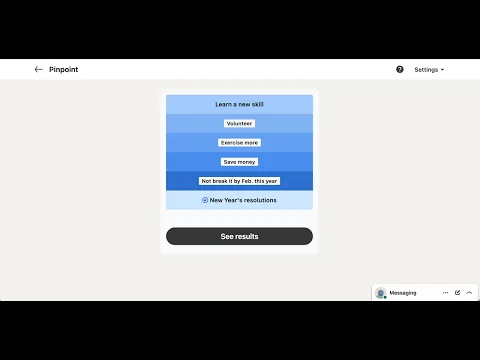
Looking for the Pinpoint #611 answer? Beyond Learn a new skill, Volunteer, Exercise more, Save money, and Not break it by Feb. this year, the logic is trickier than you think. It's not about daily habits! Get our fast answer and expert logic tips below to save your streak now.
LinkedIn Pinpoint 611 Clues & Answer
💡 Hover (desktop) or tap (mobile) each clue to see how it connects to the answer
#1
Represents the common resolution to master a hobby or professional craft.
#2
Represents the resolution to give back to the community or be more selfless.
#3
Statistically the #1 most cited New Year's resolution globally.
#4
Represents the resolution for fiscal responsibility and future planning.
#5
References the "Quitter's Day" phenomenon where most resolutions are abandoned by February.
Answer: New Year's resolutions
LinkedIn Pinpoint #611 Expert Logic
1. Introduction
LinkedIn Pinpoint #611 is a masterclass in temporal thematic logic. This puzzle taps into the collective consciousness of self-improvement and the cyclical nature of human behavior. While the first four clues represent universal aspirations, the final clue provides the necessary temporal anchor that transforms a generic "to-do list" into a specific cultural phenomenon.
2. How the Puzzle Came Together
The puzzle construction utilizes a "broad-to-narrow" funnel. It begins with Learn a new skill and Volunteer, which are noble but vague goals. When Exercise more and Save money are added, the pattern shifts from general altruism to the "Big Four" of personal development. At this stage, a player might guess "Self-improvement" or "Goals."
However, the logic is solidified by the final, highly specific clue: Not break it by Feb. this year. This meta-commentary on the fragility of human willpower acts as the "logical closer." It shifts the category from permanent lifestyle changes to the specific, often short-lived promises we make on January 1st. The transition from "aspirational actions" to a "failure deadline" is what makes this puzzle both clever and relatable.
3. Category: Pinpoint 611
- A. Core Answer: New Year's resolutions
- B. Difficulty Rating: 1.8 / 5.0 (The direct mention of "Feb. this year" serves as a very strong hint for most players).
4. Words & How They Fit
Semantic Logic Breakdown
- The Aspirational Quartet: The first four clues represent the most statistically common categories of resolutions: Intellectual, Social, Physical, and Financial.
- The Behavioral Constraint: The final clue references the "Fresh Start Effect" and the subsequent drop-off in motivation that typically occurs within the first 60 days of the year.
Logic Role Classification
| Clue | Logical Role | Why it fits |
|---|---|---|
| Learn a new skill | Intellectual Goal | Represents the common resolution to master a hobby or professional craft. |
| Volunteer | Altruistic Goal | Represents the resolution to give back to the community or be more selfless. |
| Exercise more | Physical Goal | Statistically the #1 most cited New Year's resolution globally. |
| Save money | Financial Goal | Represents the resolution for fiscal responsibility and future planning. |
| Not break it by Feb. this year | The Temporal Anchor | References the "Quitter's Day" phenomenon where most resolutions are abandoned by February. |
5. Better Analysis Directions
A. Red Herring Analysis (The "Life Coaching" Trap)
A common pitfall for high-level players is over-thinking the clues as "Professional Development" or "Bucket List items." While Volunteer and Learn a new skill fit a LinkedIn-centric professional growth theme, Not break it by Feb. is too informal for a professional framework. The "Expert" recognizes that Pinpoint often balances professional terminology with cultural memes.
B. Historical Pattern (Temporal Landmarks)
Pinpoint frequently utilizes Temporal Landmarks (events tied to specific times). Much like puzzles themed around "Days of the week" or "Months," #611 relies on the player's understanding of the calendar. Historically, when a month is mentioned in a clue, the answer is almost always an event or holiday associated with that timeframe.
C. The Expert Workflow
- Pattern Recognition: Group the first four clues under the umbrella of "Positive Change."
- Contextual Filtering: Ask, "When are these specific changes most commonly discussed as a group?"
- The 'Aha' Moment: Use the "February" clue to narrow the timeframe from "anytime" to "the start of the year."
- Verification: Confirm that "New Year's resolutions" is a common phrase that can be "broken" (fitting the verb in the final clue).
6. Lessons Learned From Pinpoint 611
This puzzle teaches us the importance of Negative Constraints. The final clue doesn't tell you what a resolution is; it tells you what people do to them (break them). In logic puzzles, understanding the lifecycle of an object (creation, maintenance, and failure) is just as important as knowing its definition.
💡 Trivia: The Science of "Quitter’s Day"
While the puzzle mentions not breaking resolutions by February, social researchers and fitness tracking apps like Strava have identified a much more specific date known as "Quitter's Day."
Statistically, the second Friday in January is the day when the highest number of people are likely to lapse in their New Year's resolutions. This means that for many, the "February" deadline mentioned in the puzzle is actually quite generous! The "Fresh Start Effect" provides a massive burst of dopamine on January 1st, but by the second week, the friction of daily routine usually overrides the novelty of the new goal.
FAQ
Q: Why is "Volunteer" considered a common resolution? A: Research shows that "living life to the fullest" and "helping others" consistently rank in the top five resolution categories, alongside health and finances.
Q: Is "Not break it by Feb." a common phrase? A: It's a play on the cultural trope that resolutions are meant to be broken. It serves as a humorous "meta-clue" that identifies the specific fragility of New Year's promises.
Mode-[3]
(Logic: Specialty Set — All clues are classic examples or characteristics of the niche cultural event of New Year's Resolutions.)
Watch the logic walkthrough