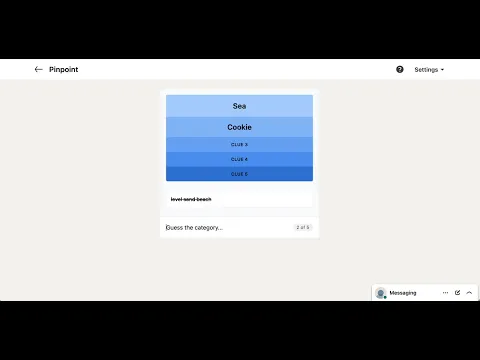
LinkedIn Pinpoint #614 Answer & Analysis
Looking for the Pinpoint #614 answer? Beyond Sea, Cookie, Gila, Loch Ness, and Frankenstein's, the logic is trickier than you think. It's not about identifying specific creatures or characters! Get our fast answer and expert logic tips below to save your streak now.
LinkedIn Pinpoint 614 Clues & Answer
💡 Hover (desktop) or tap (mobile) each clue to see how it connects to the answer
#1
Refers to the "Sea Monster," a staple of maritime maps and mythology (like the Kraken).
#2
Refers to the beloved *Sesame Street* character, moving the logic away from "scary" things.
#3
Refers to the "Gila Monster," one of the few venomous lizards in the world.
#4
Refers to "Nessie," the most famous "Loch Ness Monster" in Scottish folklore.
#5
Refers to the creature in Mary Shelley's novel, often mistakenly called just "Frankenstein."
Answer: Words that come before "monster"
LinkedIn Pinpoint #614 Expert Logic
1. Introduction
LinkedIn Pinpoint #614 is a classic example of linguistic modularity. This puzzle challenges players to find a "linguistic anchor"—a single word that, when placed after a series of seemingly unrelated nouns and adjectives, transforms them into recognizable entities. From the depths of the ocean to the deserts of the Southwest and even the aisles of Sesame Street, this puzzle spans biology, folklore, and pop culture.
2. How the Puzzle Came Together
The puzzle construction relies on the "Common Suffix" strategy. It begins with Sea and Loch Ness, which immediately evoke imagery of aquatic mysteries and cryptozoology. A player might initially think of "Legendary Creatures" or "Water Hazards." However, the introduction of Cookie pivots the logic toward pop culture, specifically childhood nostalgia.
The difficulty is fine-tuned with Gila. Unlike the others, this refers to a real-world biological organism, which prevents the category from being strictly "fictional." Finally, Frankenstein's acts as the literary anchor. By using the possessive "Frankenstein's," the puzzle acknowledges the pedantic but important distinction in classic horror: the doctor is Frankenstein, but the creature is Frankenstein's Monster. Together, these five clues converge on a single noun that defines our fears, our snacks, and our biology.
3. Category: Pinpoint 614
- A. Core Answer: Words that come before "monster"
- B. Difficulty Rating: 1.8 / 5.0 (The high recognizability of "Cookie" and "Loch Ness" makes this one of the more accessible puzzles in the Pinpoint series).
4. Words & How They Fit
Semantic Logic Breakdown
- Compound Identification: Each clue functions as a specific modifier for the word "Monster."
- Domain Diversity: The set covers five distinct domains: Mythology (Sea), Education/Media (Cookie), Herpetology (Gila), Folklore (Loch Ness), and Gothic Literature (Frankenstein's).
Logic Role Classification
| Clue | Logical Role | Why it fits |
|---|---|---|
| Sea | Ancient Archetype | Refers to the "Sea Monster," a staple of maritime maps and mythology (like the Kraken). |
| Cookie | Pop Culture Pivot | Refers to the beloved Sesame Street character, moving the logic away from "scary" things. |
| Gila | Biological Reality | Refers to the "Gila Monster," one of the few venomous lizards in the world. |
| Loch Ness | Geographic Specificity | Refers to "Nessie," the most famous "Loch Ness Monster" in Scottish folklore. |
| Frankenstein's | Literary Correctness | Refers to the creature in Mary Shelley's novel, often mistakenly called just "Frankenstein." |
5. Better Analysis Directions
A. Red Herring Analysis (The "Mythology" Trap)
A common early-game mistake is labeling the category as "Mythical Creatures." While Sea and Loch Ness fit perfectly, the Gila monster is a very real, living reptile, and Cookie is a puppet. The "Expert" identifies that the connection is not the nature of the things themselves, but the specific word used to describe them.
B. Historical Pattern (The "Blank Filler")
Pinpoint frequently utilizes the "Common Suffix/Prefix" pattern. In historical data, when clues come from wildly different fields (biology vs. cartoons), the link is almost always linguistic rather than thematic. #614 follows the "___ [Word]" template, which is a hallmark of "Easy-to-Medium" difficulty puzzles.
C. The Expert Workflow
- The "Nessie" Trigger: See Loch Ness, think Monster.
- The "Sesame" Test: Check if Cookie works with Monster. It does.
- The "Scientific" Check: Does Gila work? Yes, the Gila Monster is a known animal.
- The "Literary" Lock: Frankenstein's + Monster is the grammatically correct way to refer to Shelley's creation.
- Conclusion: The common denominator is the word "Monster."
6. Lessons Learned From Pinpoint 614
This puzzle teaches us the importance of Domain Crossing. When solving Pinpoint, if your first two clues suggest a narrow theme (like "Geography"), look at the third and fourth clues to see if they break that theme. If they do, stop looking for a thematic link and start looking for a word-based link.
💡 Trivia: The Monster Who Wasn't a Monster
While the Cookie Monster is the most famous "Monster" in this list for many, the Gila Monster holds a fascinating medical secret. Scientists discovered that a protein in the Gila Monster's saliva, called exendin-4, is remarkably similar to a human hormone that helps regulate blood sugar. This "monster" actually led to the development of several major drugs used to treat Type 2 diabetes today!
FAQ
Q: Why is it "Frankenstein's" and not just "Frankenstein"? A: In Mary Shelley's 1818 novel, Victor Frankenstein is the scientist. The creature he creates is never given a name; it is referred to as "the monster," "the creature," or "the demon." Using "Frankenstein's" is the puzzle's way of being technically accurate.
Q: Is the Gila Monster actually dangerous? A: While venomous, Gila Monsters are generally sluggish and move slowly. They pose little threat to healthy humans as long as they are left alone, making the "Monster" title a bit of an overstatement.
Q: Are there other "Monsters" that could have fit? A: Yes! "Gila," "Green-Eyed," or "Pocket" (Pokémon) could have also served as clues for this category.
Watch the logic walkthrough