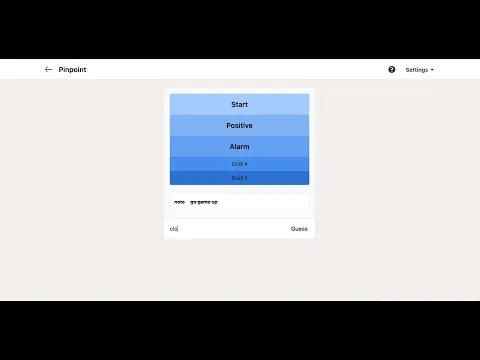
LinkedIn Pinpoint #683 Answer & Analysis
Quick Summary: Stuck on Pinpoint #683? Start, Positive, and Alarm might seem like a random collection of actions and abstract concepts, but they share a clever linguistic connection. Below, get the fast, accurate answer & 30s expert logic to save your streak!
LinkedIn Pinpoint 683 Clues & Answer
💡 Hover (desktop) or tap (mobile) each clue to see how it connects to the answer
#1
"False start" is a common penalty in track and field or football when a player moves before the signal.
#2
A "false positive" is a test result that incorrectly indicates the presence of a condition.
#3
A "false alarm" is a warning of a danger that doesn't actually exist.
#4
A "false tooth" refers to a synthetic replacement, such as a denture or bridge.
#5
"False advertising" is the illegal practice of making deceptive claims to sell a product.
Answer: Words that come after "false"!
LinkedIn Pinpoint #683 Expert Logic
🧠 Expert Logic Walkthrough
My first thought when looking at Start was incredibly broad. Are we talking about races? The beginning of a process? An ignition button? Without more context, it's just an isolated action word hanging in the void.
Then Positive entered the chat. Instantly, my brain tried to force a semantic bridge. "Start positive"? Is this a motivational theme? Maybe it’s medical, like blood types, or mathematical. But "start" and "positive" don't exactly hold hands naturally in a category of objects or synonyms.
That’s where it clicked to shift gears. When words lack a thematic bond, they almost always share a structural one—specifically, a missing word that ties them together. I looked at Alarm. What kind of alarms are there? Fire alarm, burglar alarm, car alarm... wait, false alarm. Let's test that hypothesis backward. False Start? Yes, that's a sports penalty. False Positive? Absolutely, that's a medical or statistical term. Now we’re getting somewhere.
To seal the deal, I looked down the list. A false Tooth? Yep, dentures or implants fit perfectly. Finally, the game basically handed us the trophy with Advertising (don’t believe it!). The parenthetical hint screams "deceptive," confirming that "false advertising" is the final piece of the puzzle. The satisfaction of seeing a single prefix stitch together sports, medicine, emergencies, dentistry, and law is exactly why I love this game.
Experience & Summary: When faced with words from wildly different domains (like a tooth and a start), stop looking for a shared definition. Your brain wants to group things by meaning, but you have to train it to look for compound words. Testing common prefixes and suffixes—like "water," "fire," "head," or in this case, "false"—is the ultimate lateral thinking hack for Pinpoint.
🎯 Category: Pinpoint 683
Words that come after "false"!
🔍 Semantic Analysis: Start, Positive & More
| Clue | Logical Role | Why it fits |
|---|---|---|
| Start | Sports/Action | "False start" is a common penalty in track and field or football when a player moves before the signal. |
| Positive | Medical/Statistical | A "false positive" is a test result that incorrectly indicates the presence of a condition. |
| Alarm | Emergency/Panic | A "false alarm" is a warning of a danger that doesn't actually exist. |
| Tooth | Dentistry/Anatomy | A "false tooth" refers to a synthetic replacement, such as a denture or bridge. |
| Advertising (don’t believe it!) | Business/Law | "False advertising" is the illegal practice of making deceptive claims to sell a product. |
📊 Difficulty Rating
2.5 / 5.0
This puzzle sits right in the comfortable middle of the difficulty spectrum. Start and Positive are vague enough to keep you guessing for a few seconds, acting as mild red herrings that might make you think of "motivation" or "testing." However, Alarm acts as a fantastic pivot point, and the parenthetical joke on the final clue makes the answer incredibly obvious once you read it.
📜 Historical Pattern
This puzzle is a classic example of The Blank Filler. In these setups, the clues don't share a thematic category (like "types of cheese" or "capital cities"). Instead, they act as the second half of a compound phrase or idiom, waiting for you to deduce the hidden prefix word that unites them all.
Similar Pinpoint Examples:
- Pinpoint #458: Lines, Phones, Light, Ache, First → Words that come after 'head'
- Pinpoint #534: Dial, Screen, Glasses, Burn, Flower → Words that come after 'sun'
- Pinpoint #655: Tooth, Talk, Potato, Nothings, Heart → Words that come after "sweet"
👉 Learn more about “The Blank Filler” pattern.
💡 Lessons Learned From Pinpoint 683
- Mind the Context Gap: When clues jump from a sports term to an anatomical feature, abandon synonyms. Look immediately for a bridging prefix or suffix.
- Leverage the Parentheses: LinkedIn’s puzzle creators often use parenthetical hints to inject humor and give away the logic. "(don't believe it!)" was a massive neon sign pointing straight to the word "false."
- Test the Outlier: If you have a working theory (like the word "false"), test it against the weirdest clue on the board first. If it works for Tooth, your theory is rock solid.
- Embrace the Pivot: Don't get stuck trying to force a connection between the first two clues. If Start and Positive aren't yielding a category, read ahead to Alarm to find a more recognizable phrase.
🌟 Trivia
Did you know that George Washington's famously false teeth were not made of wood, as the popular myth suggests? His Tooth replacements were actually a complex mechanism crafted from ivory, brass, gold, and even real human teeth! The wooden teeth story is likely a case of historical false information that stuck around for centuries.
🔥 Hot News
With the rapid rise of AI-generated content and deepfakes, tech companies are facing a massive wave of false advertising accusations. Consumers are increasingly raising the Alarm over hyper-realistic videos that make impossible product claims, leading regulatory bodies to crack down on how digital Advertising is authenticated. It’s a real-world reminder that when something looks too good to be true, you should definitely have a healthy "don't believe it" mentality!
🎬 30s Logic Breakdown
Rapid Recap: Watch our focused logic video below to see the connection in action. We start with the action-oriented concept of "Start," bridge it to "Positive" via the prefix word "false," and then validate it through the diverse worlds of emergency response, dentistry, and consumer law. It's a perfect example of how a single modifier can completely change the context of unrelated nouns.
👉 Watch the pinpoint 683 video walkthrough.
❓ FAQ
Why is "Advertising" accompanied by a parenthetical hint?
The game creators added "(don't believe it!)" as a playful nudge. "Advertising" alone has hundreds of associated words, but the hint specifically guides your brain toward the concept of deception or falsehood.
What is the fastest way to solve "blank filler" puzzles like this?
Read all five clues out loud in rapid succession. Your brain is a highly advanced pattern-recognition machine; hearing them together often triggers the subconscious to fill in the missing "ghost" word before you even consciously think of it.
Is "false positive" only a medical term?
While common in medicine (like a test saying you have a virus when you don't), it's also heavily used in cybersecurity, statistics, and machine learning to describe any system incorrectly flagging a benign event as an anomaly.
Did older Pinpoint puzzles use this same trick?
Absolutely. "Words that come before/after [Blank]" is one of the most frequently used patterns in LinkedIn Pinpoint history. If you look at past episodes, words like "head," "sand," "water," and "sun" have all been used as the hidden linchpin.
Watch the logic walkthrough