LinkedIn Pinpoint #514 Answer & Analysis
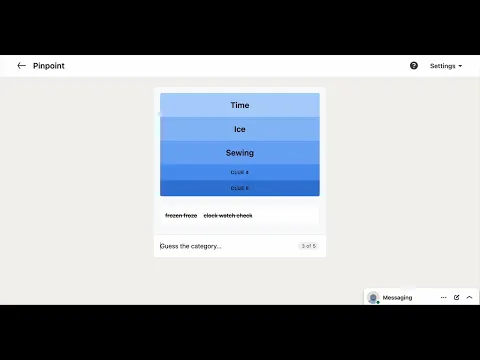
Looking for the Pinpoint #514 answer? Beyond Time, Ice, Sewing, Vending, and Automatic Telling, the logic is trickier than you think. It's not about specific types of equipment! Get our fast answer and expert logic tips below to save your streak now.
LinkedIn Pinpoint 514 Clues & Answer
💡 Hover (desktop) or tap (mobile) each clue to see how it connects to the answer
#1
Forms "Time Machine"; a theoretical device popularized by H.G. Wells.
#2
Forms "Ice Machine"; a common commercial or household appliance.
#3
Forms "Sewing Machine"; a foundational tool of the industrial revolution.
#4
Forms "Vending Machine"; the most common association for automated retail.
#5
Forms "Automatic Telling Machine" (ATM); the parenthetical note prevents confusion with human tellers.
Answer: Words that can come before 'machine'
LinkedIn Pinpoint #514 Expert Logic
1. Introduction
LinkedIn Pinpoint #514 is a masterclass in linguistic versatility. This puzzle challenges players to find a common denominator across diverse sectors: science fiction, domestic labor, retail, and high finance. While the clues represent vastly different human activities, they are unified by a single mechanical suffix that transforms a simple noun or gerund into a functional device.
2. How the Puzzle Came Together
The puzzle construction utilizes a "narrowing funnel" logic. It begins with Time and Ice, two abstract concepts that could lead toward "Age" or "Cubes." However, the introduction of Sewing shifts the cognitive load toward tools and craftsmanship.
As the player moves to Vending, the pattern becomes nearly undeniable—we are looking for a word that denotes automation. The final clue, Automatic Telling (if not on stands), provides the definitive anchor. By using the formal, full name of the "ATM," the puzzle designer forces the player to look past the acronym to the literal word "Machine." The parenthetical "if not on stands" is a witty nod to the physical reality of these devices, ensuring the logic remains airtight and distinct from other "telling" contexts.
3. Category: Pinpoint 514
- A. Core Answer: Words that can come before 'machine'
- B. Difficulty Rating: 1.8 / 5.0 (The specificity of "Vending" and "Sewing" makes this a highly accessible puzzle for most players).
4. Words & How They Fit
Semantic Logic Breakdown
- Functional Transformation: Each clue acts as a modifier that specifies the purpose of a generic mechanical system.
- Compound Phrase Construction: The logic relies on the "Blank Filler" mechanism, where the solution completes a common compound noun.
Logic Role Classification
| Clue | Logical Role | Why it fits |
|---|---|---|
| Time | Conceptual Distractor | Forms "Time Machine"; a theoretical device popularized by H.G. Wells. |
| Ice | Utility Variant | Forms "Ice Machine"; a common commercial or household appliance. |
| Sewing | Industrial Anchor | Forms "Sewing Machine"; a foundational tool of the industrial revolution. |
| Vending | Commercial Anchor | Forms "Vending Machine"; the most common association for automated retail. |
| Automatic Telling | The Formal Qualifier | Forms "Automatic Telling Machine" (ATM); the parenthetical note prevents confusion with human tellers. |
5. Better Analysis Directions
A. Semantic Trap Analysis (The "Time/Ice" Pivot)
In Pinpoint, the first two clues are often designed to be multi-valent. Time and Ice both frequently pair with "Age" (Time Age/Ice Age) or "Box" (Time Box/Ice Box). The expert player avoids committing to a theme until the third clue (Sewing) breaks the pattern of "natural eras" and moves into "human-made inventions."
B. Historical Pattern (The Suffix Search)
Pinpoint frequently utilizes the "Common Suffix" pattern. When you see a list of words that seem to describe vastly different industries (Finance, Clothing, Food), the logic is almost always a Linguistic Bridge. The game designers favor words that can turn a verb (to vend, to sew) into a noun (machine).
C. The Expert Workflow
- Pattern Recognition: Identify that Vending and Sewing are rarely used without a following noun.
- Hypothesis Testing: Test the word "Machine" against the more abstract clues (Time, Ice).
- Verification: Confirm with the final clue. "Automatic Telling Machine" is the full name of an ATM, confirming the "Machine" suffix is the intended link.
6. Lessons Learned From Pinpoint 514
This puzzle teaches us to look for Functional Suffixes. When clues seem to have nothing in common regarding their meaning, they almost always have something in common regarding their structure. In Pinpoint, if the clues are disparate, the answer is usually the "glue" that holds them together.
💡 Trivia: The "Automatic Telling" Revolution
While we call it an ATM today, the very first Automatic Telling Machine didn't actually use plastic cards. When it was debuted by Barclays in London in 1967, it used paper vouchers printed with radioactive Carbon-14! The Machine would detect the radiation to verify the voucher, then dispense a maximum of £10. Thankfully, the levels of radiation were so low they were deemed safe—but it certainly gives the term "Time Machine" a run for its money in terms of sci-fi origins!
FAQ
Q: Why was "Automatic Telling" written out instead of just saying "ATM"? A: Pinpoint avoids acronyms as clues whenever possible to maintain a consistent linguistic challenge. Writing it out forces the player to recognize the word "Machine" as part of the formal title.
Q: Could "Answer" be a possible link? A: While "Answering Machine" exists, "Ice Answer" or "Vending Answer" do not make sense, which is why "Machine" is the only logical fit for all five clues.
Watch the logic walkthrough