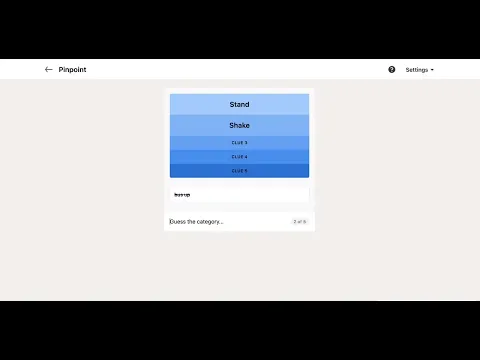
LinkedIn Pinpoint #724 Answer & Analysis
Stuck on LinkedIn Pinpoint 724? What connects Stand, Shake, Made, Writing, and Kerchief—and why? We've got you covered! This tricky linguistic trap is a perfect test of your semantic logic. Try our interactive hints first, then reveal the 30s expert logic and answer below to save your streak!
LinkedIn Pinpoint 724 Clues & Answer
💡 Hover (desktop) or tap (mobile) each clue to see how it connects to the answer
#1
Suggests an action or posture, but structurally forms the gymnastics term "Handstand".
#2
Pairs with the first clue to bait a "movement" category, but actually forms "Handshake".
#3
Breaks the verb chain and forces the player to look for compound word structures like "Handmade".
#4
A gerund that cleanly accepts the prefix to become the everyday noun "Handwriting".
#5
A highly specific historical clothing term that almost exclusively exists in modern English as "Handkerchief".
Answer: Words that come after “hand”!
LinkedIn Pinpoint #724 Expert Logic
🧠 Expert Logic Walkthrough
My first thought upon seeing Stand was highly physical. Are we talking about standing up? Posture? Maybe a hot dog stand or a lemonade stand? The word is incredibly versatile, so I kept my mental net cast wide.
Then Shake appeared. Okay, "stand" and "shake." My brain immediately went to physical movements. Are these dance moves? Instructions for a dog? "Sit, stand, roll over, shake." It felt like a plausible theory, but it felt a little too loose for a typical Pinpoint puzzle.
That’s where it clicked—or rather, didn't click—with the arrival of Made. "Stand, shake, made." That completely torpedoed the dog tricks theory. You don't tell a dog to "made." I had to pivot fast. Whenever verbs and nouns mix awkwardly like this, I immediately test for prefixes and suffixes. What word can go before or after all three? Let's try suffixes: Standby? Shake...by? No. Let's try prefixes: Under? Understand... undershake? Nope. How about "Hand"? Handstand. Handshake. Handmade! Now we’re getting somewhere.
To seal the deal, I looked at the final two clues. Dropping "hand" in front of Writing gives us handwriting. And then the absolute nail in the coffin: Kerchief. A handkerchief! The mental imagery shifted from random physical actions straight to a satisfying linguistic puzzle. Seeing the pattern lock into place across all five completely disparate words is exactly why I play this game.
Experience & Summary: The biggest trap here was getting stuck on the definitions of the words rather than their structure as compound nouns. "Stand" and "Shake" masquerade beautifully as action verbs, baiting you into looking for physical associations. The key to solving prefix/suffix puzzles is recognizing the moment your semantic logic breaks (thanks to "Made") and immediately switching to word-building mechanics.
🎯 Category: Pinpoint 724
Words that come after “hand”!
🔍 Semantic Analysis: Stand, Shake & More
| Clue | Logical Role | Why it fits |
|---|---|---|
| Stand | The Physical Red Herring | Suggests an action or posture, but structurally forms the gymnastics term "Handstand". |
| Shake | The Action Reinforcer | Pairs with the first clue to bait a "movement" category, but actually forms "Handshake". |
| Made | The Pivot Point | Breaks the verb chain and forces the player to look for compound word structures like "Handmade". |
| Writing | The Validator | A gerund that cleanly accepts the prefix to become the everyday noun "Handwriting". |
| Kerchief | The Absolute Clincher | A highly specific historical clothing term that almost exclusively exists in modern English as "Handkerchief". |
📊 Difficulty Rating
2.5 / 5.0
This puzzle is solidly in the middle of the pack. The difficulty stems entirely from the first two clues, which act as a fantastic red herring for "movements" or "dog tricks." However, once the third clue drops, the wordplay becomes highly visible, and the final clue is almost a dead giveaway for anyone familiar with compound linguistics.
📜 Historical Pattern
We’ve seen this flavor of puzzle before. This falls neatly into The Blank Filler category, where the game challenges you to find a common prefix or suffix that creates well-known compound words or phrases.
Similar Pinpoint Examples:
- Pinpoint #458: Lines, Phones, Light, Ache, First → Words that come after 'head'
- Pinpoint #459: Paper, Wood, Storm, Dollar, Castle → Words that come after 'sand'
- Pinpoint #502: Pad, Cap, Deep, Sock, Jerk → Words that come after 'knee'
👉 Learn more about “The Blank Filler” pattern.
💡 Lessons Learned From Pinpoint 724
- Identify the Odd Word Out: When a word like "Made" breaks a clear thematic chain (like "Stand" and "Shake"), immediately stop looking for definitions and start looking for wordplay.
- Test the Prefix/Suffix Rule: Keep a mental checklist of common compounding words (Head, Hand, Sun, Water, Fire) and run them against the clues when you get stuck.
- Don't Ignore the "Weird" Clue: "Kerchief" is a highly unusual word on its own. Working backward from the most unique clue often solves the puzzle faster than starting at clue one.
🌟 Trivia
Did you know the word handkerchief is a linguistic nesting doll of contradictions? A "kerchief" originally comes from the French couvre-chef, meaning "cover the head." So, a handkerchief literally translates to "a head-cover for the hand." We are walking around calling tissues "hand-head-covers"!
🔥 Hot News
The world of Handmade crafts has been in the spotlight recently as major artisan marketplaces crack down on AI-generated and mass-produced goods. As platforms struggle to redefine what true craftsmanship means in a digital age, the value of an authentic handshake agreement and genuine handmade artistry is higher than ever.
🎬 30s Logic Breakdown
Rapid Recap: Watch our focused logic video below to see the connection in action. We start with the physical concept of "Stand," bridge it to "Shake" via the prefix "Hand," and then validate it through the diverse worlds of craftsmanship, communication, and fashion. It's a perfect example of how a simple prefix can completely change the context of seemingly unrelated verbs and nouns.
👉 Watch the pinpoint 724 video walkthrough.
❓ FAQ
What does the Pinpoint clue "Kerchief" mean in this context?
It refers to the base word that, when paired with the puzzle's hidden prefix, forms the common accessory "Handkerchief."
Why did "Stand" and "Shake" make this puzzle tricky?
Both words are common action verbs. This tricks your brain into looking for a theme based on movements or physical commands rather than recognizing them as halves of a compound word.
Is there a fast way to spot "Blank Filler" puzzles?
Yes! If the clues belong to entirely different parts of speech (e.g., verbs, adjectives, and weird nouns) with no logical real-world connection, it is almost always a prefix or suffix puzzle.
What is the historical origin of the word "Handwriting"?
It emerged in the mid-16th century to distinguish text written manually by a person from text created by the newly invented and rapidly spreading printing press.
Watch the logic walkthrough